Mae Veskis Hove: Estonian Literature Café in Copenhagen
Mae Veskis Hove writes an inspiring story about how the Year of the Estonian Book helped launch a literature café.
I am originally from Jõgeva, but have been living in Denmark for 33 years. I keep up with developments in Jõgevamaa and across Estonia, but we also maintain Estonian identity here in Copenhagen. The current team at the Estonian Embassy is very active and supports the preservation of Estonian culture among local Estonians. To mark last year’s Year of the Estonian Book, the embassy decided to begin organising monthly literature cafés for local Estonians, held on the last Wednesday of each month. The initiative was led by Krõõt Kaljusto-Munck, who has previously worked as Director of Tartu City Library and has experience in organising literature cafés. She selected some of the most widely read books in Estonia – works by eight authors – which participants were expected to read. The list included: Kuu teine pool by Urmas Vadi, Vareda by Sven Mikser, Mitte ainult minu tädi Ellen by Mudlum, Kolhoosi miss and Ööema by Lilli Luuk, Kadunud hõim by Mehis Heinsaar, Rõngu roimad by Joel Jans, Kus lendab part and Part lendab edasi by Olav Osolin, and Ka naabrid nutavad by Susan Luitsalu.
Each literature café was attended by around ten people – mostly the same group. I had the pleasure of taking part in all of them. Access to the books was made easier by borrowing from one another and by reading e-books. Krõõt led the discussions in a highly engaging way – each participant shared their own views and interpretation of the book. In doing so, we also broadened our knowledge of Estonian history and everyday life. These gatherings also strengthened our sense of community.
The 2025 literature café programme concluded at the end of November with a poetry evening by local writer Eva Hammer. She has so far published two children’s books: Tirelid ja tiritammed (2015) and Vigurivändad (2022). Her poetry for adults has not yet been published. Eva read her poems aloud, even sang at one point, while her 20-year-old son accompanied her on the guitar. It was a very cosy and uplifting event on a dark November evening.
The Year of the Estonian Book also gave local Estonians a wonderful opportunity to contribute to an embroidered tapestry marking the occasion. The embassy offered various dates when people could come and take part. This project attracted participants beyond the literature café, although the initiative originated there. Once our section of the tapestry was completed, it was sent on to Estonians in the Netherlands.
The literature cafés proved so popular that we decided to continue this year. This time, however, we are taking turns leading the discussions. In January, we discussed Kaur Riismaa’s novel Väsinud valguse teooria; at the end of February, Eva Koff’s Õhuskõndija; and in March, Aliis Aalmann’s short story collection Kes aias. In April, I will be leading the discussion on Andrus Kivirähk’s novel Eesti rahva uued jutud. The programme also includes the following works: Pagulusse by Elin Toona Gottschalk, Liblikas, kes lendas liiga lähedale by Mihkel Mutt (alongside Mati Unt’s debut novel Hüvasti, kollane kass), Kirjanduskliinik by Imbi Paju, and Tantsi tolm põrandast by Kairi Look. The literature café will again take place eight times, as it pauses during the summer and at Christmas.
It is wonderful to see that Estonian identity is global – the Estonian language and culture know no borders.
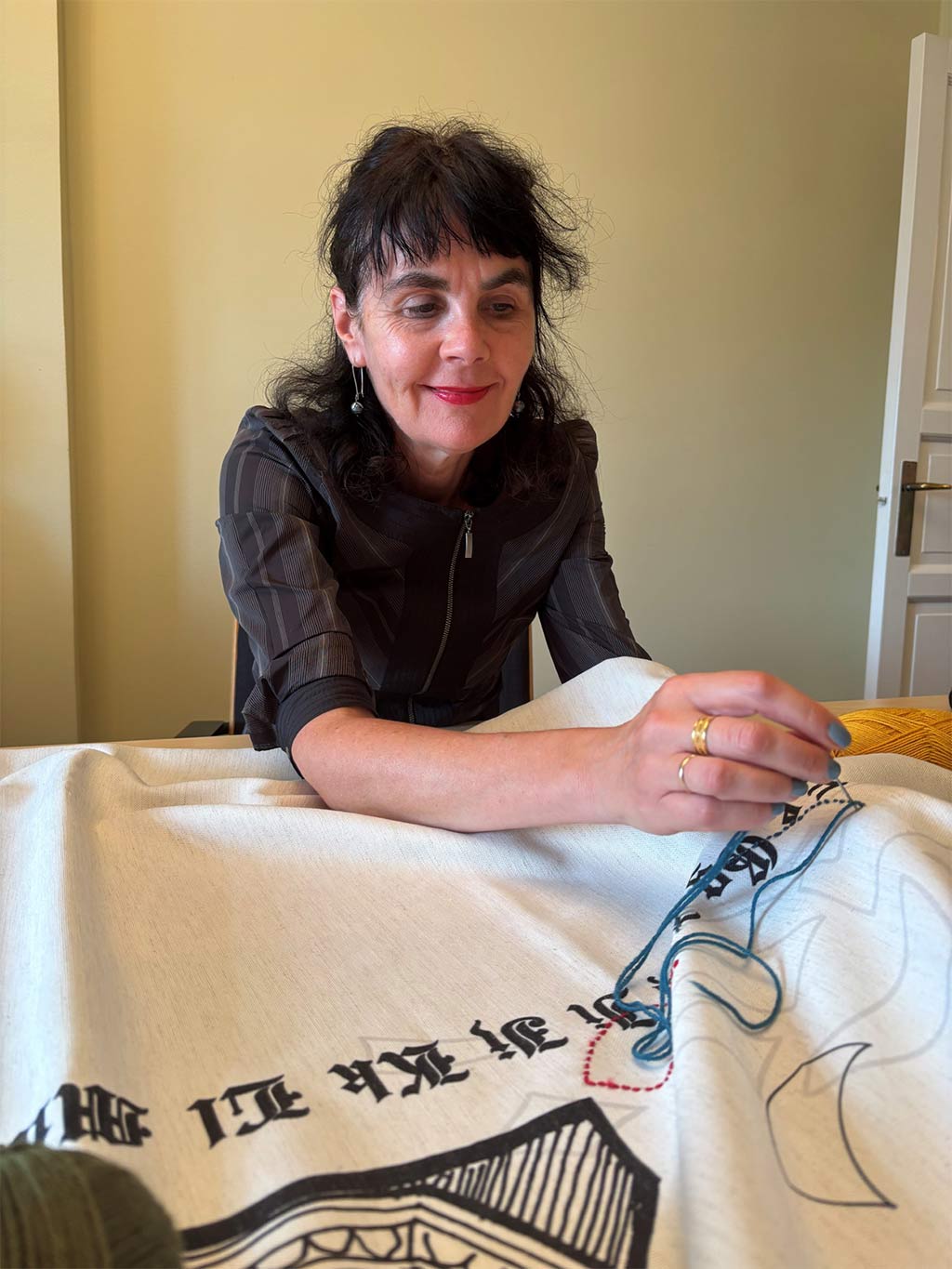
Mae Veskis Hove